Working Hrs: 9:00 AM - 6.00 PM


Working Hrs: 9:00 AM - 6.00 PM
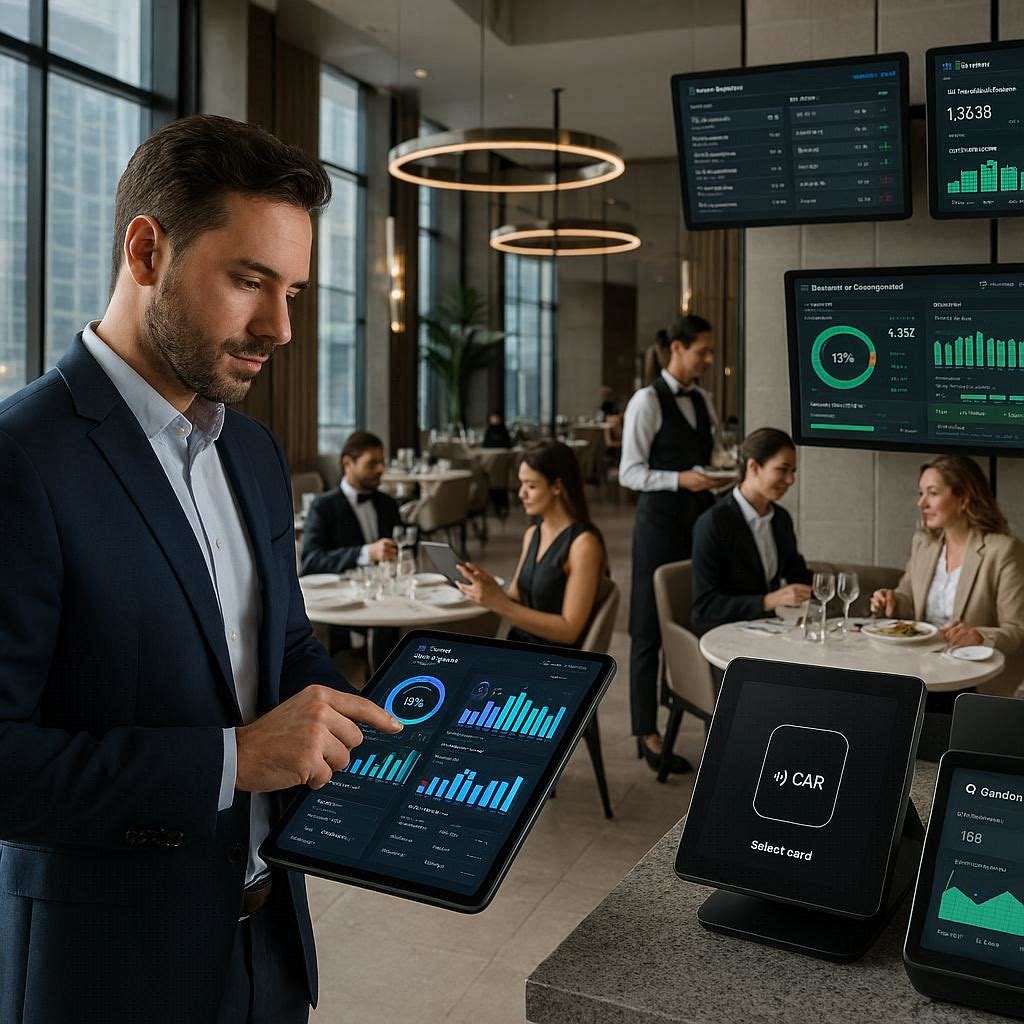
In 2025, restaurant Point of Sale (POS) systems have evolved far beyond billing and payment processing. Today's POS platforms act as the central hub of restaurant operations, connecting sales, inventory, kitchen management, online ordering, customer loyalty, and business analytics into one integrated system.
Restaurants that invest in modern POS technology are improving efficiency, reducing costs, and creating better guest experiences while gaining valuable insights for business growth.
The restaurant industry faces increasing challenges:
Rising food costs
Higher labor expenses
Growing competition
Increased delivery demand
Changing customer expectations
A modern POS system helps restaurant owners manage these challenges by providing real-time visibility and control over operations.
Traditional POS systems required expensive servers and on-site maintenance. In 2025, cloud-based POS solutions dominate the market.
Access reports from anywhere
Automatic software updates
Multi-location management
Improved data security
Lower maintenance costs
Restaurant owners can monitor sales, inventory, and performance in real time using a smartphone or laptop.
Artificial Intelligence is becoming a core feature of advanced POS systems.
AI helps restaurants:
Predict daily sales
Forecast inventory requirements
Reduce food waste
Optimize purchasing
Improve staffing schedules
This enables operators to make data-driven decisions instead of relying on guesswork.
Customers increasingly expect convenient digital ordering.
Modern POS platforms integrate directly with:
Restaurant websites
Mobile apps
Delivery platforms
QR code ordering systems
Benefits include:
Fewer manual errors
Faster order processing
Better customer experience
Centralized order management
Acquiring new customers is expensive. Retaining existing customers is more profitable.
Today's POS systems track:
Visit frequency
Spending patterns
Favorite menu items
Reward points
Restaurants can create personalized promotions that increase repeat business and customer loyalty.
Customers prefer fast and secure payment options.
POS systems now support:
Tap-to-pay cards
Mobile wallets
QR code payments
Digital receipts
Contactless transactions improve checkout speed and enhance guest convenience.
Paper tickets are rapidly disappearing.
Modern POS systems connect directly to Kitchen Display Systems, allowing:
Faster communication
Reduced order errors
Better kitchen coordination
Improved service speed
This leads to higher operational efficiency and improved guest satisfaction.
Restaurant owners no longer need to wait until the end of the month to understand performance.
Modern POS dashboards provide:
Sales trends
Food cost analysis
Labor performance
Peak business hours
Menu profitability
These insights help managers make immediate operational improvements.
For restaurant groups and franchise operators, POS systems now provide centralized control across multiple locations.
Owners can:
Compare branch performance
Standardize menus
Monitor inventory
Track profitability
Manage staff performance
All from a single dashboard.
The most profitable restaurants continuously optimize their menus.
POS reports reveal:
Best-selling items
Low-performing dishes
High-margin products
Customer ordering patterns
This data helps operators improve profitability without increasing prices dramatically.
Labor costs remain one of the largest expenses in hospitality.
Modern POS systems help by:
Tracking employee productivity
Managing schedules
Monitoring overtime
Measuring upselling performance
Reducing labor inefficiencies
Better workforce management leads to improved profitability.
Before investing in a POS solution, consider:
✅ Cloud-based access
✅ Inventory management integration
✅ Online ordering support
✅ Loyalty program features
✅ Kitchen display integration
✅ AI-powered analytics
✅ Multi-location capability
✅ Mobile reporting access
✅ Easy staff training
✅ Reliable customer support
In 2025, a POS system is no longer just a billing tool—it is the operating system of a successful restaurant. The right POS platform helps owners reduce costs, improve efficiency, increase revenue, and make smarter business decisions.
Restaurants that leverage modern POS technology are better equipped to compete in a rapidly changing hospitality landscape and position themselves for long-term growth.
.

Expert Restaurant Consulting for
Growth, Profit & Performance



© MRCHEF SUBRA CONSULTANT AND GENERAL TRADING – FZCO . All rights reserved.

Expert Restaurant Consulting for
Growth, Profit & Performance

© MRCHEF SUBRA CONSULTANT AND GENERAL TRADING – FZCO . All rights reserved.
Expert Restaurant Consulting for
Growth, Profit & Performance