Working Hrs: 9:00 AM - 6.00 PM


Working Hrs: 9:00 AM - 6.00 PM
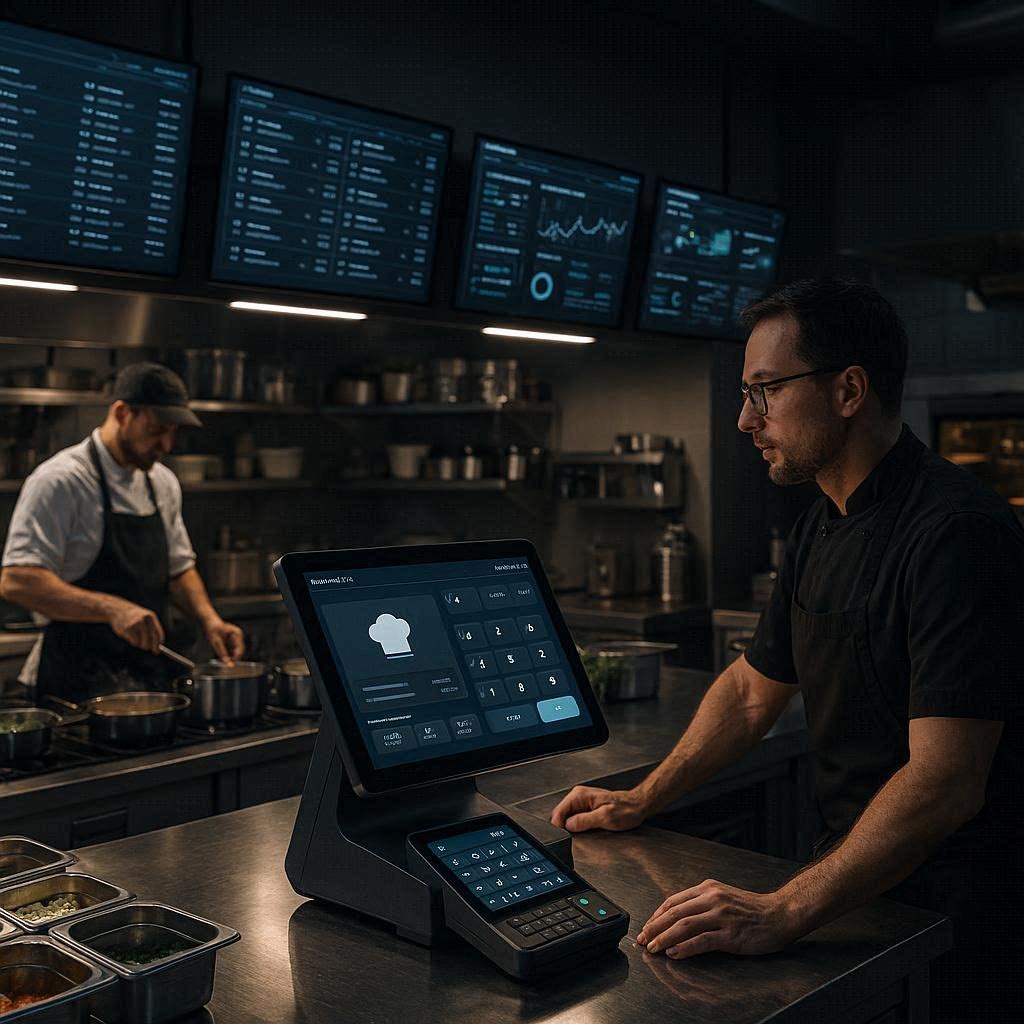
The hospitality industry is evolving rapidly, and restaurants that embrace technology are gaining a significant competitive advantage. Modern Point of Sale (POS) systems are no longer just tools for processing payments. With Artificial Intelligence (AI) integration, today's POS platforms have become powerful business management solutions that help restaurant owners increase profitability, improve guest experiences, and streamline operations.
As labor costs rise and customer expectations continue to grow, AI-powered POS systems are becoming an essential investment for restaurants, cafés, cloud kitchens, hotels, and catering businesses.
An AI-powered POS system combines traditional sales processing with intelligent data analysis and automation. Instead of simply recording transactions, the system analyzes customer behavior, sales patterns, inventory movements, employee performance, and operational trends to provide actionable insights.
The result is faster decision-making, improved efficiency, and increased profitability.
One of the biggest challenges in hospitality is predicting customer demand accurately.
AI can analyze:
Historical sales data
Seasonal trends
Local events
Weather conditions
Customer purchasing behavior
This allows restaurants to forecast sales more accurately and prepare staffing, inventory, and production schedules accordingly.
Food waste directly impacts restaurant profitability.
AI-enabled POS systems help:
Track ingredient consumption
Predict stock requirements
Alert managers about low inventory
Reduce over-ordering
Minimize food waste
This leads to better inventory control and lower food costs.
Today's guests expect personalized service.
AI can identify:
Favorite dishes
Ordering frequency
Spending habits
Dining preferences
Restaurants can then offer targeted promotions, loyalty rewards, and personalized recommendations that increase customer retention and spending.
Not all menu items contribute equally to profits.
AI analyzes:
Item popularity
Profit margins
Customer preferences
Sales trends
Restaurant owners can use these insights to:
Promote high-profit items
Remove underperforming dishes
Adjust pricing strategically
Improve menu design
AI-driven POS systems can recommend additional items based on customer orders.
Examples:
Suggest desserts after a main course
Recommend beverages that pair with meals
Offer combo upgrades
Promote seasonal specials
This increases average order value without requiring additional staff effort.
Labor is one of the highest operating costs in hospitality.
AI-powered POS systems help managers monitor:
Sales performance
Order accuracy
Average ticket size
Upselling success
Productivity metrics
This allows owners to identify training opportunities and reward top performers.
Traditional reporting often requires manual analysis.
AI generates instant dashboards showing:
Daily sales performance
Peak operating hours
Best-selling items
Food cost trends
Profitability indicators
Managers can make informed decisions immediately rather than waiting for end-of-month reports.
Cloud kitchens rely heavily on technology for success.
AI-powered POS systems help:
Manage multiple delivery platforms
Consolidate orders
Optimize kitchen workflows
Forecast demand
Monitor delivery performance
This improves efficiency and reduces operational complexity.
Marketing becomes more effective when supported by customer data.
AI can:
Segment customer groups
Automate email campaigns
Create personalized offers
Predict customer churn
Improve loyalty program performance
Restaurants can spend less on marketing while achieving better results.
By 2026 and beyond, AI POS systems are expected to include:
Voice-controlled order management
Predictive staffing schedules
Dynamic menu pricing
AI-powered reservation optimization
Guest sentiment analysis
Automated purchasing recommendations
Advanced fraud detection
Personalized dining experiences
Restaurants adopting these technologies early will be better positioned to compete in an increasingly digital marketplace.
The combination of AI and POS technology is transforming the hospitality industry. Restaurants that leverage AI-powered POS systems can improve operational efficiency, reduce costs, increase revenue, and deliver superior guest experiences.
Rather than replacing managers and staff, AI serves as a powerful decision-making tool that helps hospitality businesses operate smarter and more profitably.
In a highly competitive market, AI-powered POS systems are no longer a luxury—they are becoming a necessity for sustainable growth and long-term success.

Expert Restaurant Consulting for
Growth, Profit & Performance



© MRCHEF SUBRA CONSULTANT AND GENERAL TRADING – FZCO . All rights reserved.

Expert Restaurant Consulting for
Growth, Profit & Performance

© MRCHEF SUBRA CONSULTANT AND GENERAL TRADING – FZCO . All rights reserved.
Expert Restaurant Consulting for
Growth, Profit & Performance